Up to $83 trillion will move from Baby Boomers to younger generations by 2045. For mid-tier banks and credit unions, the question is whether your digital infrastructure will be ready.
Nicholas Zeman, Senior Enterprise Architect at Zions Bancorporation, addressed this at LEAP 2026. His core argument: This transfer is structurally different from anything previous generations managed, and harnessing three technologies will separate the institutions that retain assets from those that don’t.
Watch Nicholas walk through this in full: LEAP 2026 session video. Key points below.
What makes this transfer different?
Boomer wealth isn’t a house and a stock portfolio. It’s spread across investment accounts at Fidelity or Schwab, digital currencies, real estate, deeds, and third-party fintech apps, and it may transfer to multiple generations simultaneously and continuously. That complexity requires more than updated onboarding flows. It requires a new infrastructure layer.
Three technologies converging
Three technologies are arriving at the same time, and together they change what “wealth transfer” can mean:
- Tokenized assets
- Smart contracts
- Agentic AI
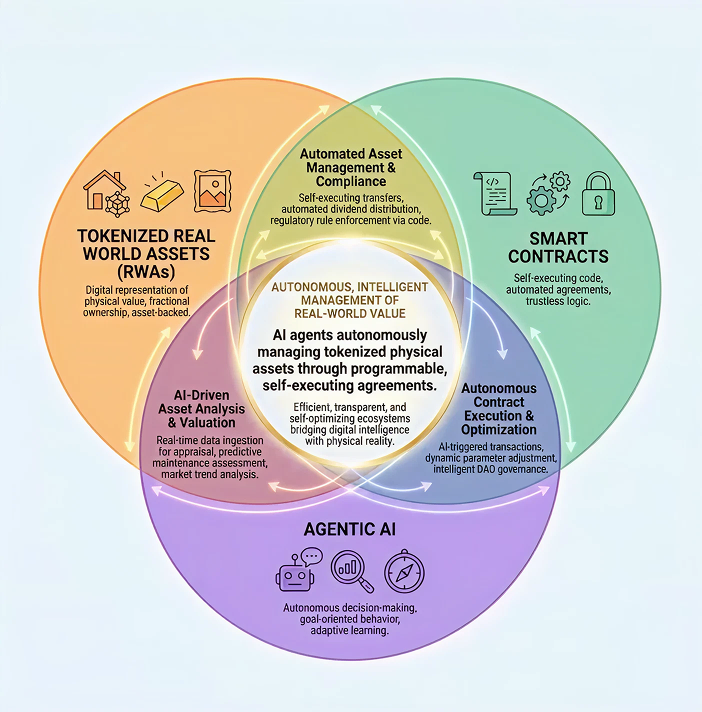
The key shift is from one-time estate documents to continuous, automated, condition-based wealth distribution.
Tokenized assets
Tokenized assets bring stocks, bonds, deeds, and other holdings on-chain, making ownership trackable and transferable with speed and precision. Unlike paper-based assets, they can be held in reserve and distributed incrementally, making condition-based inheritance possible.
Smart contracts
Smart contracts are the execution layer of living documents that distribute assets proportionally and respond to life events: a graduation, a marriage, a stock hitting a target price, and so on. They carry weight that’s harder to contest than a paper will. But they’re also complex and can contain exploits, which is why human review is non-negotiable.
Agentic AI
Agentic AI ties it all together. It writes smart contracts, interacts with the ledger, and with appropriate permissions can act on behalf of a wealth manager, or eventually a customer directly.
Where FDX fits
Most of your customers don’t hold everything with you. FDX’s data exchange protocol connects your systems with investment platforms, fintech apps, and on-chain assets, giving you a unified view of a customer’s full financial picture. This is table stakes for modern wealth management.
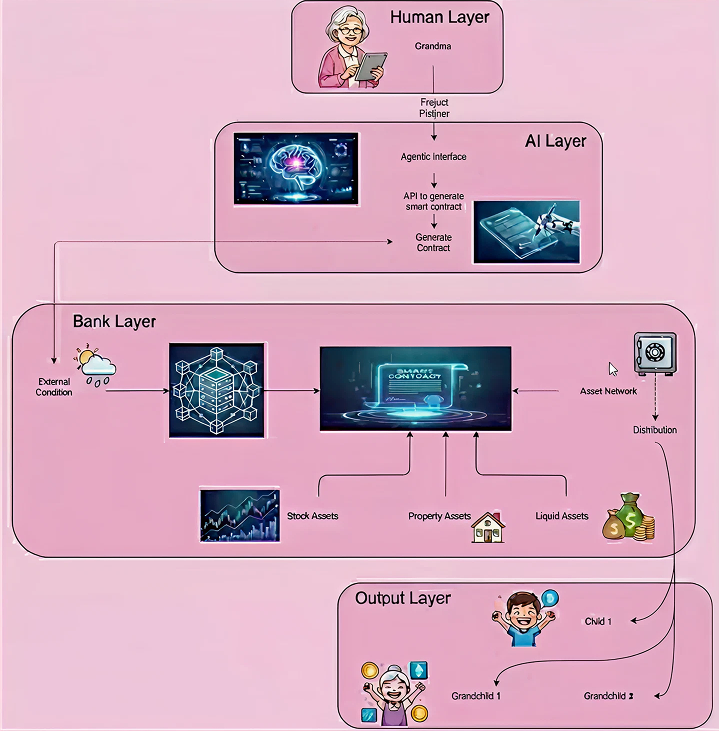
Your institution’s role in this model is as the trust layer. You hold contract ownership, serve as executor, and for now your wealth managers sit between the customer and the AI. That human checkpoint is what Boomers expect and what regulators will likely require. Future generations may route around it entirely.
Banks are currently building blockchain-based networks for tokenized deposits, and eventually tokenized stocks and other assets. These networks interact with smart contracts, pushing execution and distribution to the bank layer, with your institution acting as executor. Condition-based payouts (disbursing when a stock hits a value, or a beneficiary graduates, for example) are already technically possible.
Looking ahead
Three near-term implications worth building into your planning:
- AI simulations showing customers how their assets can benefit future generations will become a key acquisition and retention tool. Expect competitors to deploy these within 18-24 months.
- Smart contract regulation is coming. Ethereum is currently the de facto standard, but expect the same auditability requirements already being applied to stablecoins.
- Agentic infrastructure guardrails: Digital identity, federated permissions, and human review workflows need to be in your architecture plans now, not after the first incident.
The institutions that move on this early will own the trust relationship with the next generation of wealth holders. The ones that wait will be competing for accounts that have already moved on.
Hungry for more? Then dive into the details of agentic engineering in financial services in this recent blog.