

Before you begin
- A running Tyk Gateway (v5.13 or later) connected to your Tyk Dashboard. See Self-managed
- A Dashboard user account with MCP write permissions
- Go 1.22 or later, or Docker (to run the Mock MCP Server)
- Node.js 18 or later (to run MCP Inspector). If you don’t have it, download it from nodejs.org.
Instructions
Step 1: Start the Mock MCP Server
The Mock MCP Server is the upstream your proxy will route traffic to. It exposes 15 tools across six categories (users, posts, products, analytics, utilities, and streaming) and requires no configuration or credentials.-
Start the Mock MCP Server using Go or Docker:
- Go
- Docker
-
Confirm the server is running on
http://localhost:7878. Leave it running.
Your Tyk Gateway must be able to reach
localhost:7878. If your gateway runs in Docker or on a remote host, replace localhost with the appropriate hostname or IP address.Step 2: Create the MCP proxy
-
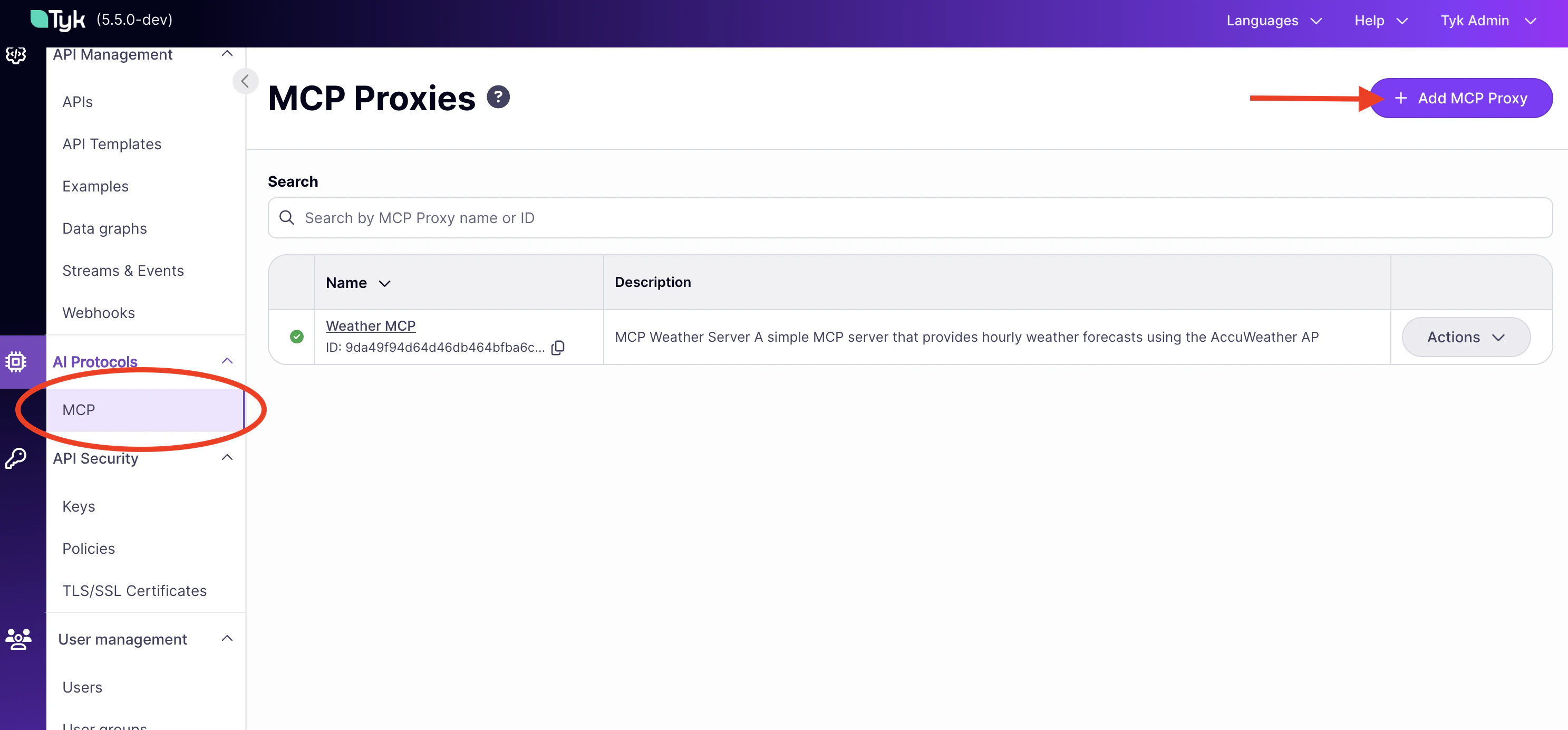
In the Tyk Dashboard sidebar, click MCP, then click Add MCP Proxy.
-
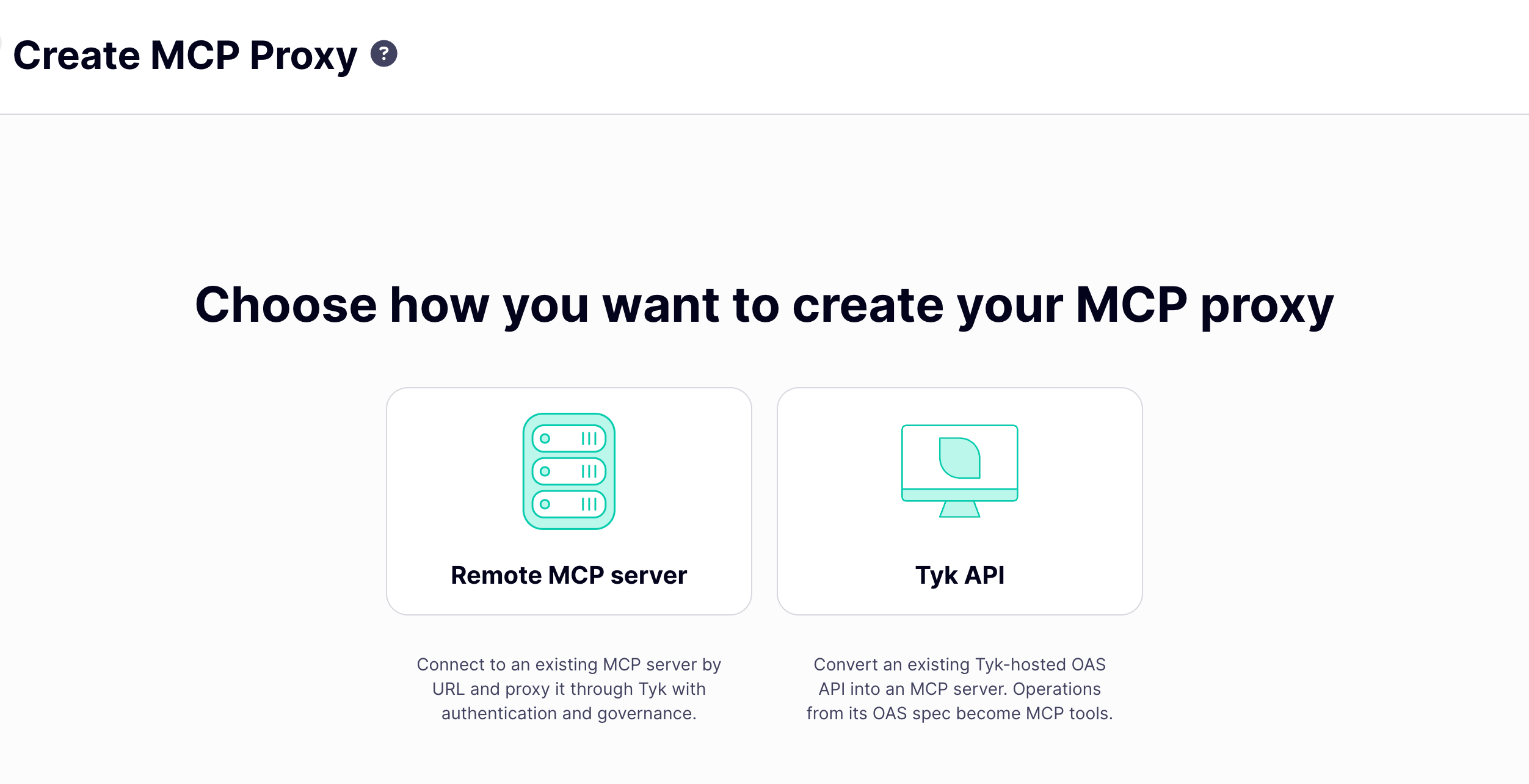
Click the Remote MCP server card to connect to an existing MCP server by URL.
-
Name your proxy. Enter
Mock MCP Server. Tyk derives the listen path from the name automatically. Click Continue.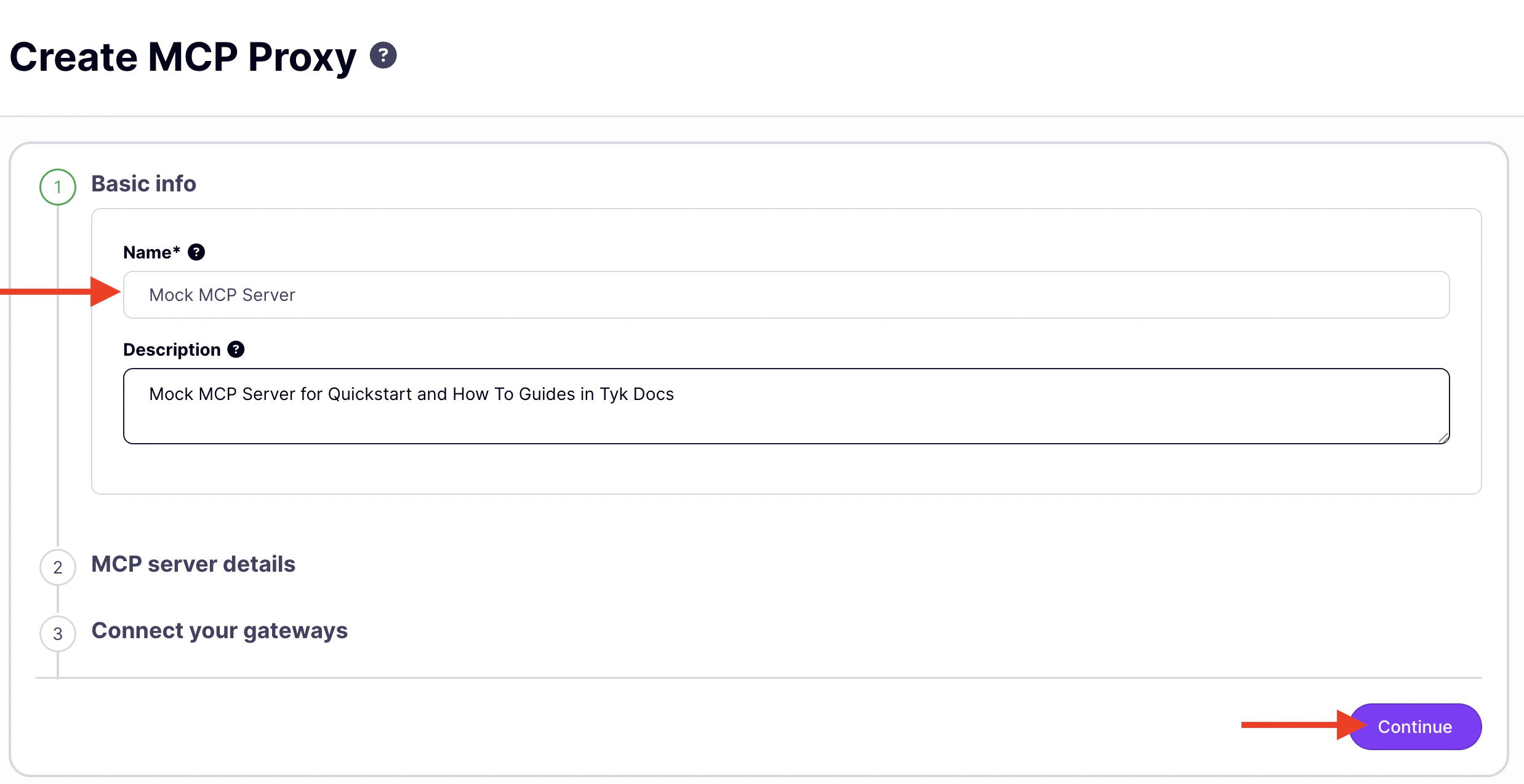
-
Set the upstream URL. Enter
http://localhost:7878/mcp. Click Continue.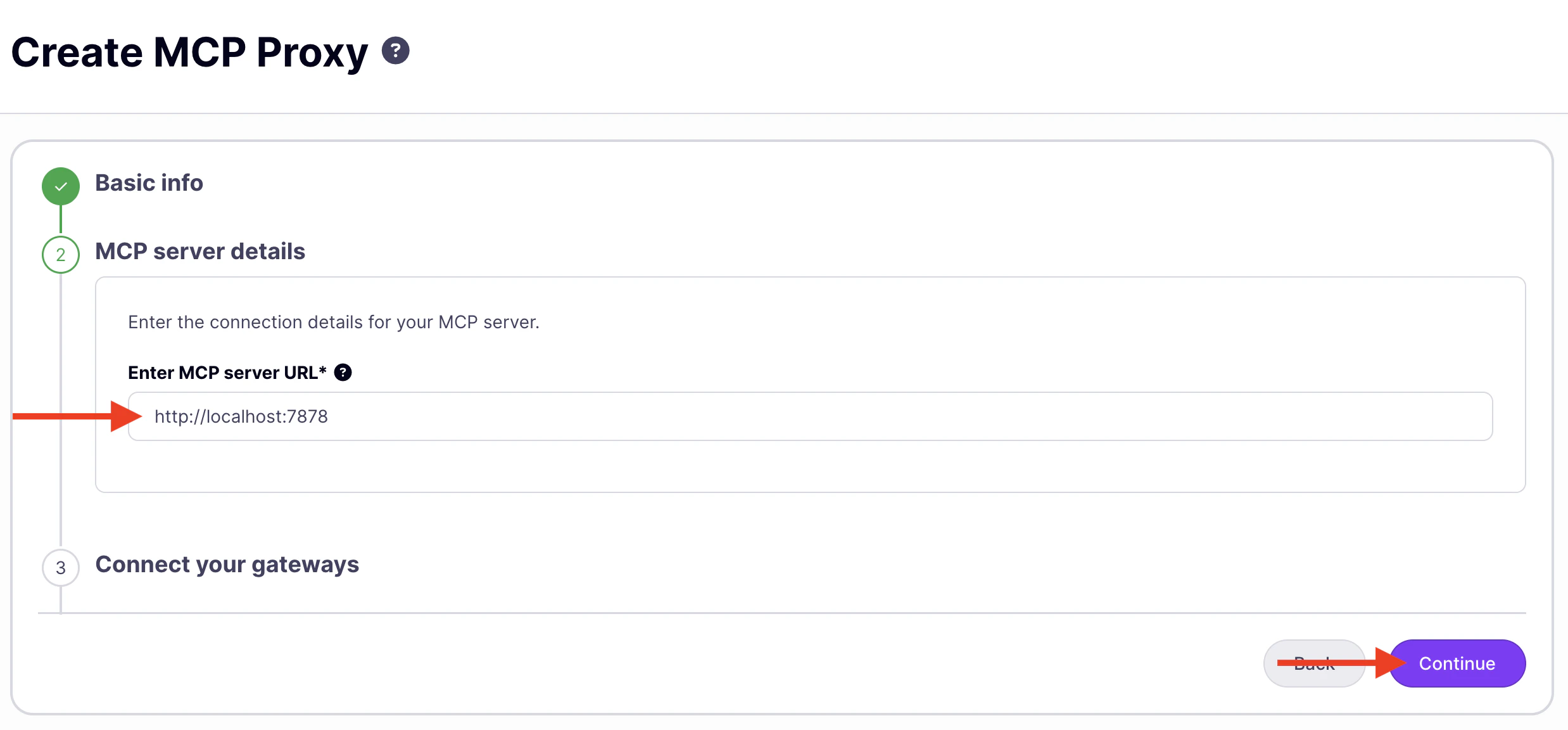
-
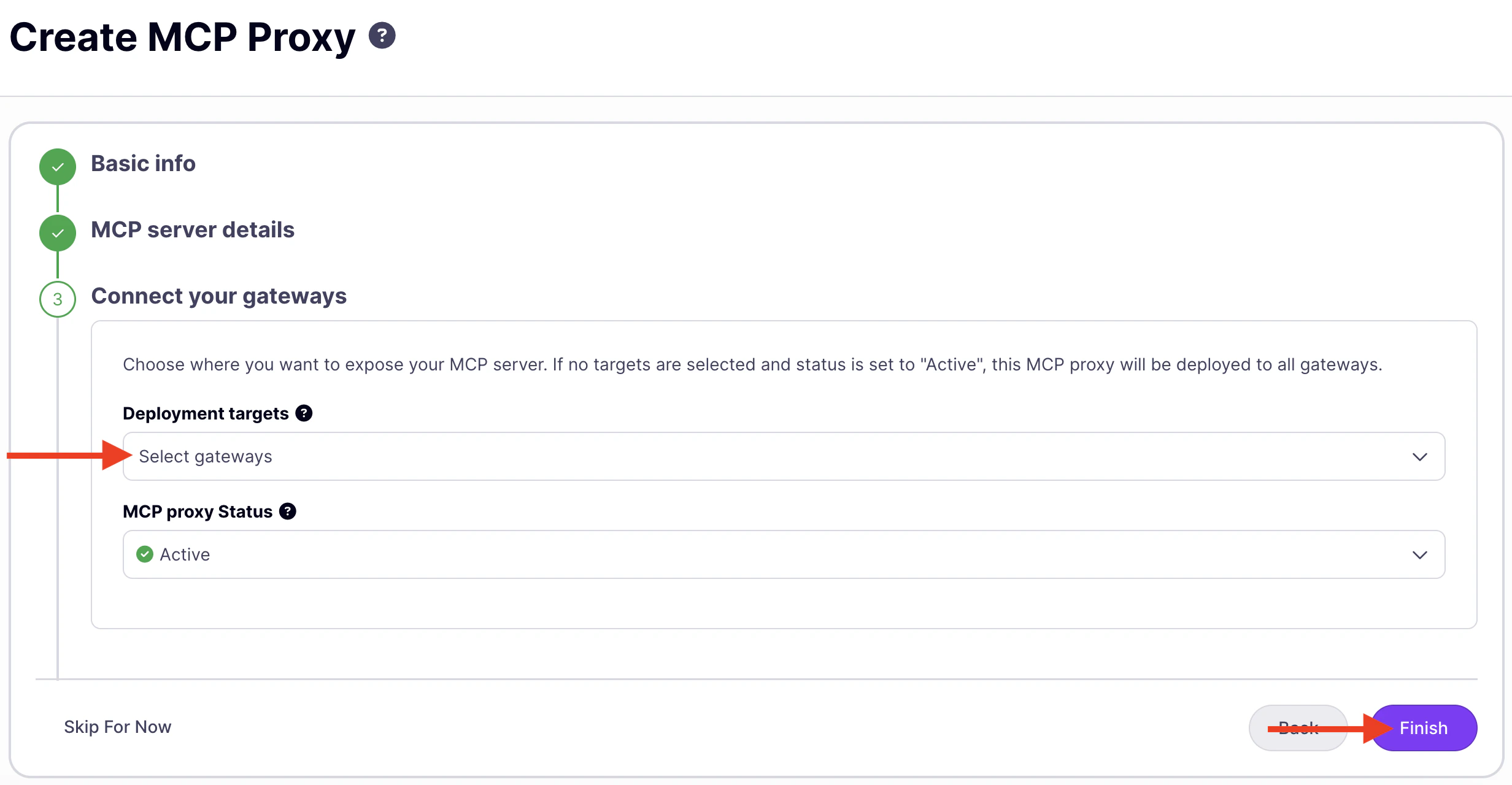
Connect gateways. Select your gateway instances, or leave blank to deploy to all gateways. Click Finish, then click Save MCP Proxy.
Step 3: Find your MCP endpoint
- Click Edit to open the proxy designer.
-
Find the MCP Proxy URL at the top of the page and append
/mcpto get your MCP endpoint.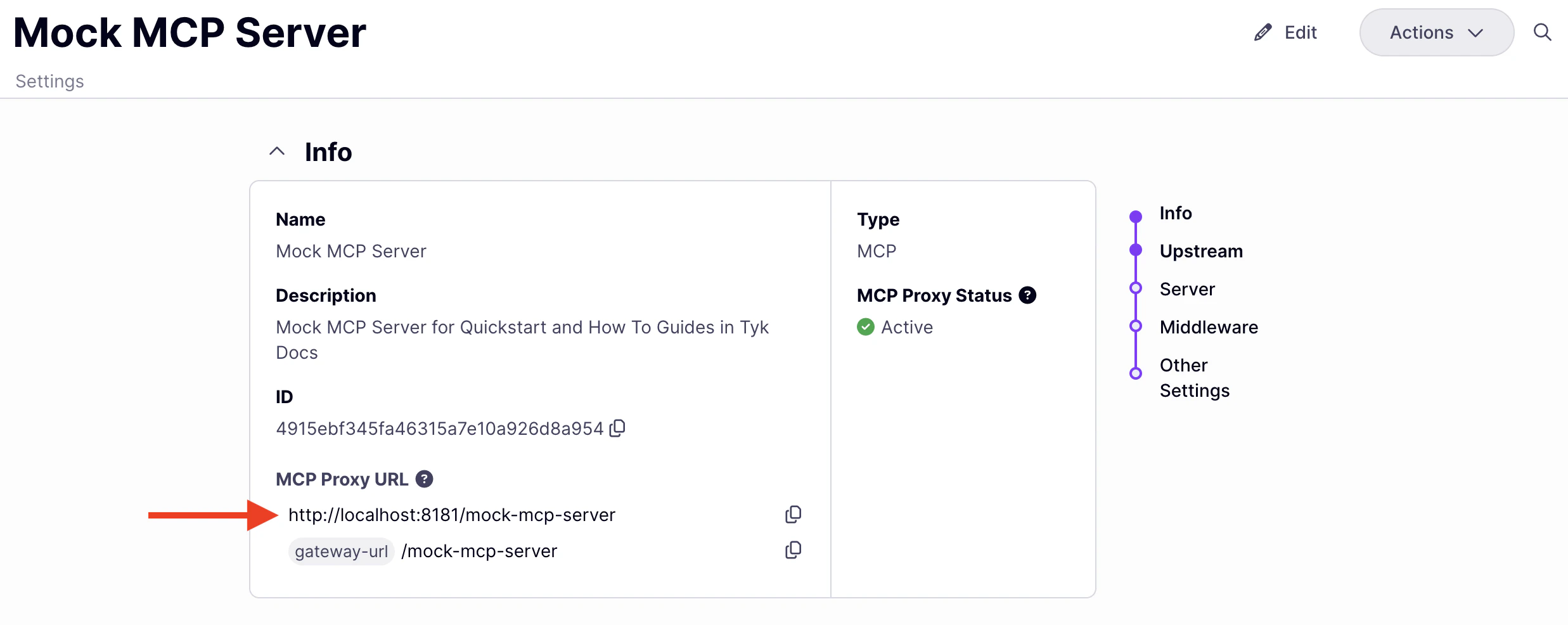
https://my-gateway.example.com/mock-mcp-server, your MCP endpoint is: - Note this URL down; you’ll enter it into MCP Inspector in the next step.
Step 4: Connect with MCP Inspector
MCP Inspector is a browser-based tool for testing MCP servers. It handles the session handshake, lists available tools, and lets you call them interactively.-
Start MCP Inspector:
MCP Inspector downloads automatically on first run.
- Open the URL printed in your terminal.
-
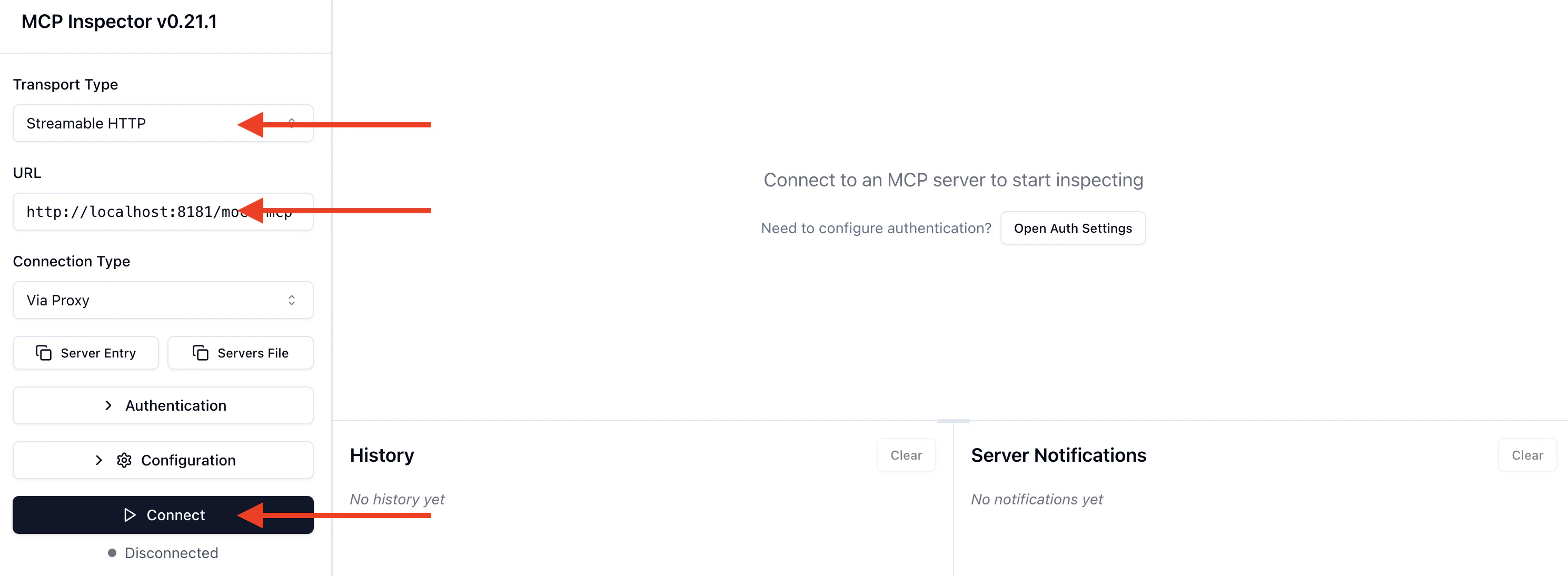
Set Transport Type to
Streamable HTTP. - Set URL to your MCP endpoint from Step 3.
-
Click Connect.
Step 5: Call a tool
-
Click the Tools tab. You’ll see all 15 Mock MCP Server tools listed: Tyk has proxied the
tools/listresponse from the upstream. - Select get_users and click Run. The Mock MCP Server responds with a sample user list.
Step 6: View the call in analytics
- In the Tyk Dashboard sidebar, go to Monitoring → Activity by MCP.
-
Check that the
tools/callrequest appears under Primitives Traffic and Most Used Primitives, withget_userslisted as the invoked tool. Theinitializehandshake from MCP Inspector appears separately with no primitive name, as expected for a session lifecycle call.
Analytics data is written by Tyk Pump asynchronously. Allow a few seconds after making a call before checking the analytics page. If no data appears, verify that analytics recording is enabled and that Tyk Pump is running and connected to your storage backend.
Troubleshooting
Connection refused in MCP Inspector: Check that your Tyk Gateway is running and that the MCP endpoint URL is correct. Confirm the Mock MCP Server is running on port7878.
No tools listed: The proxy connected but the upstream is not reachable. Confirm the Mock MCP Server is running. If your gateway runs in Docker, replace localhost in the upstream URL with host.docker.internal.
What’s next
You have a working MCP proxy routing traffic to the Mock MCP Server. The next step is to secure it, adding authentication so only authorized agents can connect. How to secure an MCP proxy → After that, the series continues with:- Restrict tool access: Configure a tool allowlist so agents can only call the tools you have approved. See Block an MCP Tool.
- Create access tiers: Use policies to define different levels of access for different agents. See MCP proxy policies.
- Set up token exchange: Use RFC 8693 token exchange so the inbound agent token is replaced with a backend-scoped token before reaching the upstream MCP server. See Token exchange.
- Understand the concepts: See MCP Gateway: Core Concepts for the mental model behind sessions, middleware levels, and policies.